
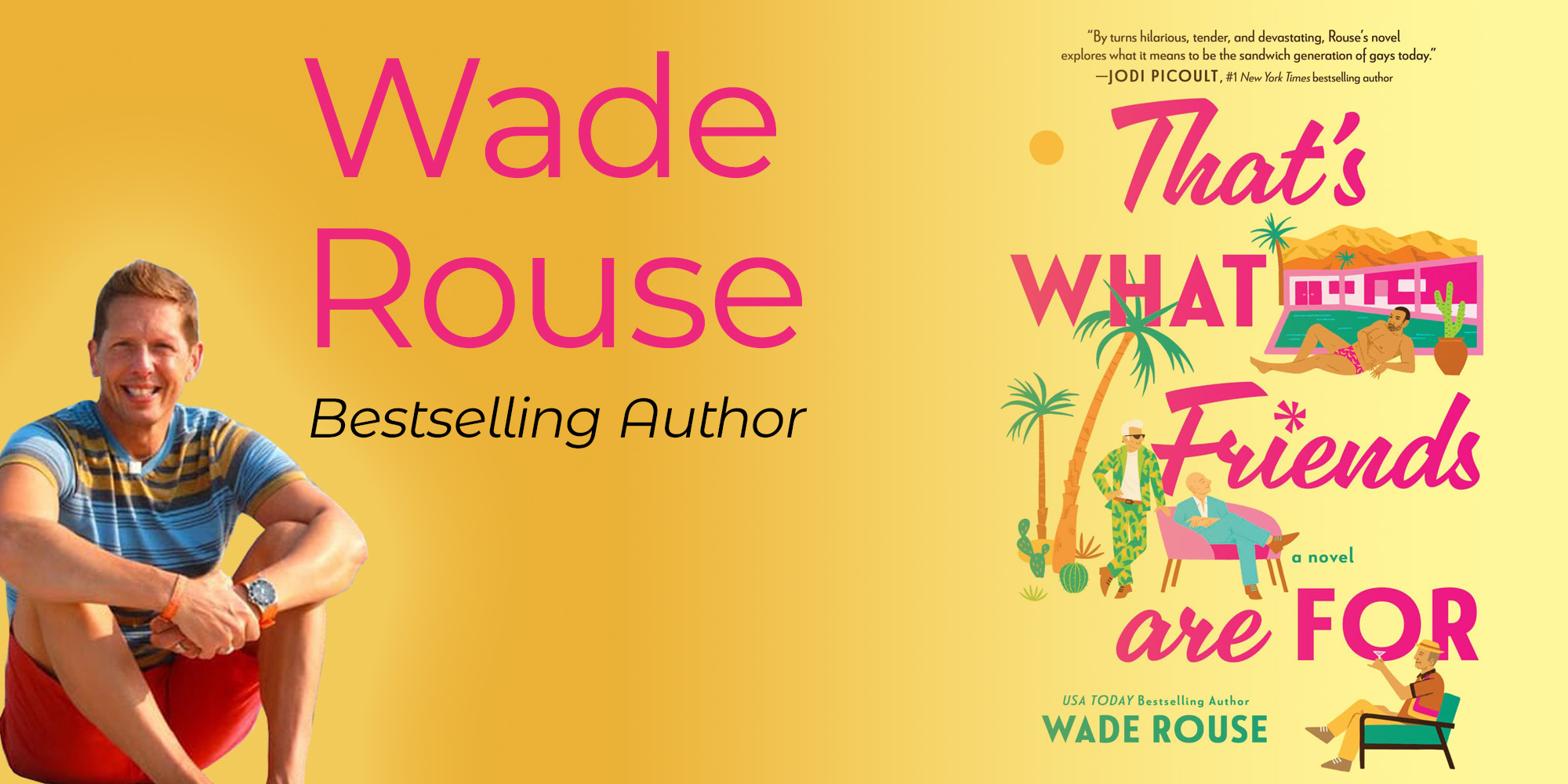
Bestselling memoirist and novelist Wade Rouse, who also writes as Viola Shipman, spoke with us about his upcoming novel, That’s What Friends Are For (Mira Books), published under his own name. He candidly discussed life, humor, and the power of storytelling.
Finding Himself in Four Golden Women
Rouse’s novel is inspired by iconic sitcom The Golden Girls. Growing up closeted in the 1980s rural Midwest, Rouse found in The Golden Girls a connection that transcended age and circumstance.
Before Friday night fraternity parties, he covertly watched episodes while on the phone (a rotary!) with his mother and grandmother. Watching later in gay bars, he discovered community.
“Humor is a great connector,” he says, “but it can also be a shield.” Before I learned how to love myself, that show helped me understand connection and safety.”
That’s What Friends Are For borrows the show’s comedic timing and layered emotional beats while exploring the lives of four older gay men navigating friendship, aging, and identity (he’s “a Dorothy,” by the way, while husband Gary is “a total Rose”).
Writing a Sitcom You Can Read
Translating a sitcom’s rhythm onto the page presented a challenge. “I wanted it to feel like you were reading a show,” Rouse explains. That meant pacing humor carefully and cutting anything that didn’t serve character or story, even if it made him laugh.
Upon revisiting The Golden Girls, Rouse was struck by the depth and bravery of its subject matter: AIDS, homophobia, aging, healthcare inequity, betrayal, estrangement, all tackled in a 1980s primetime sitcom. “Forty years later,” he reflects, “so many of those issues haven’t changed.”
Wade Rouse & Viola Shipman
Rouse’s decision to write this novel under his own name reflects its personal nature. “My editor said, ‘I love the Viola novels, but I want you to write a book for you again.’” Drawn from experiences of community, loss, resilience, and humor, this is both the easiest and hardest book he’s written so far: “Easy just because I know the characters, and I knew how I wanted to write this book and the humor, but it was the hardest because I felt such pressure to get the first one right under my own name.”
Early Reception
The novel has resonated deeply with early readers, including Jodi Picoult. “She didn’t just say she liked the book. She got it,” he says, visibly moved. “She understood what it means to be part of a generation that fought for rights only to see those rights threatened again.”
What Advice Would Wade Rouse Give His Younger Self?
Rouse wished he’d learned to love himself sooner. “I didn’t think I deserved love,” he says. “I robbed myself of years of happiness, and it robbed the world, I think, of what each of us is here to give.”
He makes up for lost time by writing and by embracing vulnerability. “I don’t mean to sound corny, but just to be our true authentic selves…we can really change the world.” Whether writing as Wade Rouse or Viola Shipman, his mission is the same: to find hope, humor, and humanity in stories we tell and stories we live.
Check out the full interview with Rouse, below:
More Information About That’s What Friends Are For by Wade Rouse
That’s What Friends Are For releases March 3 and is available on Hoopla the same day. His popular Facebook Live literary happy hour, “Wine & Words with Wade,” takes place Thursdays at 6:30 PM EST.
More information about Rouse, including dates of his upcoming US tour, are on his author website.
*Title availability may vary


Endless entertainment.
No subscription required.
With Hoopla you can read, listen, and watch for free with your library card.
Get Started